• Ash Wednesday
    Feb 17 2026
    Read OnlineAsh WednesdayQuote: Remember that you are dust, and to dust you shall return. ~Distribution of ashesReflection: It was a common practice within the early Church that those who were found guilty of grave public sin needed to do public penance before they were admitted back into communion with the Church and admitted to the Most Holy Eucharist. The public sinners came forward in sackcloth forty days before Easter and were sprinkled with ashes, in keeping with many Old Testament examples of public penance. They fasted and prayed for forty days and then, on Easter, were readmitted into full communion with the Church. Eventually, prior to the end of the first millennium, this practice was extended to the entire Church as a way of highlighting everyone’s need for penance. One of the earliest mentions of this practice becoming universal comes from an English Benedictine monk who wrote:We read in the books both in the Old Law and in the New that the men who repented of their sins bestrewed themselves with ashes and clothed their bodies with sackcloth. Now let us do this little at the beginning of our Lent that we strew ashes upon our heads to signify that we ought to repent of our sins during the Lenten fast.Today, as a sign of our ongoing need to repent of our sins and do penance, the faithful are invited to come forward to be marked with ashes as a sign of their commitment to the penitential season of Lent, so as to celebrate with great joy the Solemnity of Easter. Lent is forty-six days long. Forty of those days are penitential days, and six of them are Sundays. Lent begins on Ash Wednesday and concludes with the Easter Vigil. The forty penitential days are an imitation of Jesus’ forty days in the desert.As we come forward to receive ashes, the minister traditionally says, “Remember that you are dust, and to dust you shall return.” This line is taken from the Book of Genesis when God expelled Adam and Eve from the Garden of Eden. He told Eve that she would suffer the pains of childbirth and be subjected to her husband. God told Adam that he would labor for his food through sweat and toil. To both of them, God said this curse would last “Until you return to the ground, from which you were taken; For you are dust, and to dust you shall return” (Genesis 3:19). Thus, the final curse of original sin is death: “...to dust you shall return.”As we come forward to receive ashes, we should hear God saying to us, as He said to Adam and Eve, that we also suffer the consequences of original sin and will die. But that curse must be seen in the light of God’s final plan of salvation. Today, we acknowledge that the curse of death will endure but also hold onto the hope of resurrection made possible through Christ. Lent is a time of repentance for our sin and hope in redemption. Ash Wednesday is our liturgical and public statement that we have chosen both repentance and redemption.As you come forward to receive the ashes today, don’t just go through the motions. Make this act a prayer and one of deep interior devotion. Call to mind your sins and the sins of your whole life, as best you can. Acknowledge the just punishment of eternal death that you deserve for your sins. But then call to mind the infinite and unmerited mercy of God. Remember that even though you are an undeserving sinner, God has reached down from Heaven to offer you the gift of eternal salvation. He has invited you to receive this gift through your repentance and humility. Humble yourself today in “sackcloth and ashes,” and as with those public sinners of old, God will use this Lent to more fully unite your soul with His through His glorious death and resurrection.Prayer: Most glorious and Triune God, You have justly condemned me but mercifully offered me redemption. As I enter this season of Lent, I wholeheartedly acknowledge my sin and repent. Please be merciful to me, a sinner. Help me to make this Lent a truly penitential season so that my soul will be more disposed to receive You this Easter. Jesus, I trust in You.Image: Ash Wednesday by Julian FałatSource: Free RSS feed from catholic-daily-reflections.com — Copyright © 2026 My Catholic Life! Inc. All rights reserved. This content is provided solely for personal, non-commercial use. Redistribution, republication, or commercial use — including use within apps with advertising — is strictly prohibited without written permission.
    Show More Show Less
    7 mins
  • February 17: Seven Holy Founders of the Servite Order—Optional Memorial
    Feb 16 2026
    Read OnlineFebruary 17: Seven Holy Founders of the Servite Order—Optional MemorialThirteenth CenturyInvoked to aid in the imitation of the charity and patience of Our Lady of SorrowsCanonized January 15, 1888 by Pope Leo XIIILiturgical Color: White (Purple if Lenten Weekday)Quote:I have chosen you to be my first Servants, and under this name you are to till my Son’s Vineyard. Here, too, is the habit which you are to wear; its dark color will recall the pangs which I suffered on the day when I stood by the Cross of my only Son. Take also the Rule of Saint Augustine, and may you, bearing the title of my Servants, obtain the palm of everlasting life. ~From a vision of the Blessed Virgin MaryReflection: Bonfilius, Alexis, Manettus, Amideus, Hugh, Sostene, and Buonagiunta were seven successful cloth merchants from Florence, Italy. As members of a lay organization dedicated to the Blessed Mother, they were each devout in their faith. Their comradery, centered around their faith, not only united them more fully to God, but also to each other with a holy bond and a holy mission.At that time, Florence was a bustling city wrought with conflicts, due to competition between the noble rulers and the populists who sought to govern by the will of the people. Florence’s economy was also booming, due to the new merchant class whose financial worth was counted in coins rather than in the amount of land and servants they possessed. Within this context, these seven holy men of Florence desired an escape from the lust for money and power, and from the conflict that continued to grow.Around the year 1233, it is reported that all seven of these devout men individually experienced an apparition of the Blessed Virgin Mary, calling them to withdraw from the world and to devote themselves entirely to the service of God. They obeyed, and on September 8, the Feast of the Birth of the Blessed Virgin Mary, they gave up their careers and property and moved into a dilapidated house outside the city wall. They embraced the mendicant life of begging, poverty, and prayer. Many were drawn to them and found in them men of wisdom and virtue. As a result, they received many requests for spiritual counsel and moral guidance. Though they were drawn to this form of charity, they soon discovered that their first calling was to a life of prayer. Their close proximity to the city of Florence hindered the solitude to which they were called, so they moved to a dwelling eleven miles from the city on Monte Senario.Around the year 1240, at Monte Senario, the seven received a joint vision of the Blessed Virgin Mary who appeared to them surrounded by angels. She instructed them on their mission, clothed them in their habits, presented them with their rule of life, and personally founded their order.Central to their mission was to spread devotion to the Seven Sorrows of Mary and to be her servants. Within a decade, the order was tentatively approved by the pope and their numbers began to grow. In addition to new foundations in Italy, they quickly spread to Germany, France, and Spain. By the early thirteenth century, final papal approval was given and the order spread to Hungary, Bohemia, Austria, Poland, and modern-day Belgium. Eventually, missions were established in Crete, the Philippines, and India. Today, the Servite order has expanded to all parts of Europe, Africa, Australia, and the Americas.These holy men were called together by our Blessed Mother as they worked and lived in a growing city. Once united by their faith, they were set apart and drawn by God to a life of prayer. From that prayer, and their commitment to poverty, chastity, and obedience, God drew many others into their companionship. And through their companions, missionaries went forth to the corners of the earth.As you ponder the lives of these holy men, especially consider the unity they shared by answering the call to pray and serve together. That unity flowed from their love of God and our Blessed Mother. It also flowed from their united obedience to their calling. United as one in Christ, each individual was strengthened and the fruitfulness of their labors grew exponentially.You, too, are called to holiness and to a holiness that unites you with others who share your mission. Pray to God that you will be able to follow the example of these holy men by joining with those whom God has put in your life to strengthen your faith and expand the mission you have been given.Prayer: Dearest Founders of the Servite Order, you were called and you responded. You were given direction by Our Lady herself, and you obeyed. From that obedience, God raised up an army of servants who have spent centuries sharing His love and mercy with the world. Pray for me, that I may always obey God’s will and seek to serve Him alongside those whom God has placed in my life. Seven Holy Founders, pray for me. Jesus, I trust in You.Source: Free RSS feed from catholic-daily-reflections.com — Copyright ©...
    Show More Show Less
    8 mins
  • February 14- Saints Cyril, Monk, and Methodius, Bishop—Memorial
    Feb 13 2026
    Read OnlineFebruary 14: Saints Cyril, Monk, and Methodius, Bishop—Memorial(Optional Memorial if Lenten weekday)Saint Cyril: c. 827–869Saint Methodius: c. 815–885Co-Patrons of Europe, Slavic peoples, unity of Eastern and Western ChurchesPre-Congregation canonizationQuote: Hear my prayer and protect your faithful people, for you have established me as their unsuitable and unworthy servant. “Make your people known for the unity and profession of their faith. Inspire the hearts of your people with your word and your teaching. You called us to preach the Gospel of your Christ and to encourage them to lives and works pleasing to you. “I now return to you, your people, your gift to me. Direct them with your powerful right hand, and protect them under the shadow of your wings. May all praise and glorify your name, the Father, Son, and Holy Spirit. Amen. ~From an old Slavonic biography of Saint CyrilReflection: Imagine what life would be like if you were unable to read because the language you spoke was not even in written form. No alphabet, no books, only a spoken language. This is the context into which our saints today were sent to preach the Gospel.Their story began in Thessalonica, Greece, a territory first evangelized by Saint Paul. Seven sons were born to a Greek-speaking imperial magistrate and his wife. Two of the boys were named Constantine and Michael. Their mother was most likely of Slavic descent, and the boys learned her unwritten language, along with Greek and Latin. When Constantine was about fourteen years old, he was sent to the great Greek city of Constantinople to study. It was there that he also came to know the young Byzantine Emperor, Michael III, who was only a young child. After completing his education, Constantine decided to become a priest. Shortly after his ordination, he was invited to teach and soon became well known as the “Philosopher.” Constantine’s brother Michael, about twelve years older than Constantine, began his career in civil service in Macedonia but chose to abandon that position to become a monk, taking the name Methodius.When Constantine was about thirty years old and his brother Methodius was in his early forties, Constantine decided to give up his teaching career and embrace a life of prayer in his brother’s monastery. Within a few years, however, Emperor Michael III, now an adult, asked Constantine to go on a mission to evangelize the Jews and Turks of Khazars, modern-day Russia, Ukraine, and Crimea. Methodius accompanied him on this mission, and they learned both Hebrew and Turkish so as to speak to the people in their native tongues.Within a couple of years, Prince Rastislav of Moravia asked Emperor Michael III to send missionaries to Great Moravia, today’s Czech Republic. His people had rejected paganism and embraced Christianity, but they didn’t have anyone who could explain the faith to them in their native Slavic language since the Germanic clergy adhered strictly to Latin. It was this mission that would be the beginning of a new era and a new method of evangelization within the Church.In Great Moravia, Constantine and Methodius began to translate the Bible and liturgical books into the Slavic language. Since there was no written form of the language or even an alphabet, Cyril created one. He translated the various sounds into symbols, which enabled him and his brother to then write down the sacred texts. In addition to their translations, they began to teach the people and future Slavic clerics how to read their new written language. Eventually, the new alphabet developed into what is now known as the Cyrillic alphabet and is the basis of many Eastern European and Asian languages used by more than 250 million people today.Despite the fact that the Slavic people were overjoyed to hear the Gospel and pray the liturgy in their native language, many of the Germanic clergy took issue with this approach. To solve this problem, the brothers traveled to Rome where they received the approval of Pope Adrian II, who ordained them bishops and sent them back to Great Moravia. Before leaving Rome, however, Constantine fell sick. Before dying, he fully consecrated himself to God as a monk in one of the Greek monasteries, taking the monastic name Cyril. His brother Methodius then returned to Great Moravia to continue his work.Bishop Methodius spent the next fourteen years evangelizing the people in their native language, forming clergy, and effectively administering the Church. He continued to endure harsh treatment from the Germanic clergy, even being imprisoned by them for a time, but he pressed on, extending his missionary work even beyond the borders of Great Moravia. It wasn’t until a millennia later that these brothers received the universal honor they deserved when the Western Church added them to its liturgical calendar. A century after that, Pope John Paul II, a Slav himself, honored these two brothers with the title of co-patrons of Europe...
    Show More Show Less
    10 mins
  • February 11: Our Lady of Lourdes—Optional Memorial
    Feb 10 2026
    Read entire reflection online >>>

    February 11: Our Lady of Lourdes—Optional Memorial

    January 11–July 16, 1858
    Patron Saint of the sick, asthma sufferers
    Liturgical Color: White (Purple if Lenten Weekday)

    Quote:
    I went every day for a fortnight, and each day I asked her who she was, and this petition always made her smile. After the fortnight I asked her three times consecutively. She always smiled. At last I tried for the fourth time. She stopped smiling. With her arms down, she raised her eyes to Heaven and then, folding her hands over her breast she said, “I am the Immaculate Conception.” ~Testimony of Saint Bernadette Soubirous

    Prayer:
    Dearest Mother, the Immaculate Conception, you chose the humblest of instruments in Bernadette to proclaim your universal message of repentance. You declared to the world that you are, indeed, the Immaculate Conception. Please pray for me, bring healing to my soul, and help me to be freed of all sin so that I may one day share in your glory in Heaven. Saint Bernadette, pray for me. Our Lady, the Immaculate Conception, pray for me. Jesus, I trust in You.

    Source: Free RSS feed from catholic-daily-reflections.com — Copyright © 2026 My Catholic Life! Inc. All rights reserved. This content is provided solely for personal, non-commercial use. Redistribution, republication, or commercial use — including use within apps with advertising — is strictly prohibited without written permission.

    Image via Adobe Stock
    Show More Show Less
    9 mins
  • February 10: Saint Scholastica, Virgin—Memorial
    Feb 9 2026
    Read entire reflection online >>>

    February 10: Saint Scholastica, Virgin—Memorial

    c. 480–543
    Patron Saint of nuns, school, tests, reading, convulsive children
    Invoked against storms and rain
    Pre-Congregation canonization
    Liturgical Color: White (Purple if Lenten Weekday)

    Quote:
    The holy nun said to her brother: “Please do not leave me tonight; let us go on until morning talking about the delights of the spiritual life.” “Sister,” he replied, “what are you saying? I simply cannot stay outside my cell.”
    When she heard her brother refuse her request, the holy woman joined her hands on the table, laid her head on them and began to pray. As she raised her head from the table, there were such brilliant flashes of lightning, such great peals of thunder and such a heavy downpour of rain that neither Benedict nor his brethren could stir across the threshold of the place where they had been seated. ~Dialogues, Saint Gregory the Great

    Prayer:
    Saint Scholastica, you and your brother shared not only the same family, but you were also deeply united in a spiritual friendship centered on God. Please pray for me, that I may discover friends who assist me on my journey through this world and that I may be such a friend to others. Saint Scholastica and Saint Benedict, pray for me. Jesus, I trust in You.

    Source: Free RSS feed from catholic-daily-reflections.com — Copyright © 2026 My Catholic Life! Inc. All rights reserved. This content is provided solely for personal, non-commercial use. Redistribution, republication, or commercial use — including use within apps with advertising — is strictly prohibited without written permission.

    Image: Johann Baptist Wenzel Bergl, CC BY-SA 3.0, via Wikimedia Commons
    Show More Show Less
    8 mins
  • February 8: Saint Josephine Bakhita, Virgin—Optional Memorial
    Feb 7 2026
    Read entire reflection online >>>

    February 8: Saint Josephine Bakhita, Virgin—Optional Memorial

    1869–1947
    Patron Saint of Sudan and human-trafficking survivors
    Canonized October 1, 2000 by Saint Pope John Paul II
    Liturgical Color: White (Purple if Lenten Weekday)

    Quote:
    If I was to meet those slave-traders that abducted me and those who tortured me, I’d kneel down to them to kiss their hands, because, if it had not have been for them, I would not have become a Christian and religious woman. ~Saint Josephine Bakhita

    Prayer:
    Saint Josephine, you endured unimaginable cruelty from earthly masters. Through it all, you sought out the God Who continuously spoke to you from within. When you met this glorious God within the Catholic faith, you refused to serve anyone other than Him. Please pray for me, that I may allow God to transform every hardship in my life into a source of His grace and transforming mercy. Saint Josephine Margaret Fortunata, pray for me. Jesus, I trust in You.

    Source: Free RSS feed from catholic-daily-reflections.com — Copyright © 2026 My Catholic Life! Inc. All rights reserved. This content is provided solely for personal, non-commercial use. Redistribution, republication, or commercial use — including use within apps with advertising — is strictly prohibited without written permission.

    Image: Vatican
    Show More Show Less
    10 mins
  • February 8: Saint Jerome Emiliani, Founder—Optional Memorial
    Feb 7 2026
    Read entire reflection online >>>

    February 8: Saint Jerome Emiliani, Founder—Optional Memorial

    1486–1537
    Patron Saint of orphans and abandoned children
    Canonized on July 16, 1767 by Pope Clement XIII
    Liturgical Color: White (Purple if Lenten Weekday)

    Quote:
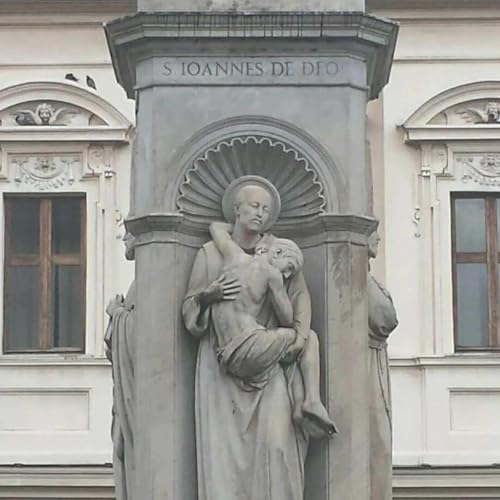
    One morning, we were twenty-eight at St. Magdalene Hospital and we were praying. Since we had nothing to eat, father Jerome told us, “Do not doubt, my sons, the Lord will take care!” And while he was still praying, we heard the doorbell ring. They went to open the door. A person wanted to see father Jerome. He went to the door and came back with four loaves of bread…he fed all twenty-eight of us with only those four loaves and fresh water because he did not have anything else. And everybody had enough. And the father kept saying we had to eat cheerfully because the Lord would never abandon us. ~Eyewitness testimony

    Prayer:
    Saint Jerome, you had a desire for greatness within your heart. Though you first sought to fulfill that desire by worldly and passing honors, God opened your eyes and helped you to discover that the greatest honor is found in the wholehearted service of His holy will. Please pray for me, that I may imitate your generosity and devote myself to the service of the Gospel and the care of those in need. Saint Jerome, pray for me. Jesus, I trust in You.

    Source: Free RSS feed from catholic-daily-reflections.com — Copyright © 2026 My Catholic Life! Inc. All rights reserved. This content is provided solely for personal, non-commercial use. Redistribution, republication, or commercial use — including use within apps with advertising — is strictly prohibited without written permission.

    Giacomo Guerrini, CC BY-SA 4.0, via Wikimedia Commons
    Show More Show Less
    9 mins
  • February 6: Saints Paul Miki and Companions, Martyrs—Memorial
    Feb 5 2026
    Read entire reflection online >>>

    February 6: Saints Paul Miki and Companions, Martyrs—Memorial

    Martyred February 5, 1597
    Patron Saints of Japan
    Canonized by Pope Pius IX on June 8, 1862
    Liturgical Color: Red

    Quote:
    Our brother, Paul Miki, saw himself standing now in the noblest pulpit he had ever filled. To his “congregation” he began by proclaiming himself a Japanese and a Jesuit. He was dying for the Gospel he preached. He gave thanks to God for this wonderful blessing and he ended his “sermon” with these words: “As I come to this supreme moment of my life, I am sure none of you would suppose I want to deceive you. And so I tell you plainly: there is no way to be saved except the Christian way. My religion teaches me to pardon my enemies and all who have offended me. I do gladly pardon the Emperor and all who have sought my death. I beg them to seek baptism and be Christians themselves.” ~Office of Readings

    Prayer:
    Holy Martyrs of Nagasaki, you and countless others gave your lives in witness to the faith that God planted in your hearts. Please pray for me, that I will have the same faith and courage that each one of you had, so that I will be a witness to Christ in all that I do. Holy martyrs of God, pray for me. Jesus, I trust in You.

    Source: Free RSS feed from catholic-daily-reflections.com — Copyright © 2026 My Catholic Life! Inc. All rights reserved. This content is provided solely for personal, non-commercial use. Redistribution, republication, or commercial use — including use within apps with advertising — is strictly prohibited without written permission.


    Image: The Martyrs of Nagasaki (1597), engraving by Wolfgang Kilian, Augsburg
    Show More Show Less
    9 mins