• December 18, Advent Weekday - Divine Truth vs. Our Imagination
    Dec 17 2025
    Read Online

    When Joseph awoke, he did as the angel of the Lord had commanded him and took his wife into his home. Matthew 1:24

    The human person is a fascinating subject of study. Throughout the ages, countless philosophers, theologians, and social scientists have sought to understand the complexities of human nature. Within the Catholic philosophical tradition, Saint Thomas Aquinas stands out as an influential and trustworthy teacher on this topic.

    Aquinas teaches that while a person sleeps, the external senses are inactive. However, sense images within the imagination can still be active to varying degrees, depending on the depth of sleep, leading to the formation of dreams. Human reason is not entirely inactive during sleep, but it operates in a diminished capacity, which often results in dreams being nonsensical. Because the intellect’s judgment is not fully engaged, the content of dreams is generally neither moral nor immoral.

    There is, however, another form of dream that transcends the normal and natural type. This is exemplified in Joseph’s dream. In such divinely inspired dreams, like Joseph’s, human reason is fully active—not because of the natural workings of the imagination—but because the dream is a direct result of divine intervention. In Joseph’s case, his reason and intellect were fully engaged, allowing him to comprehend the divine message delivered by the angel. He was presented with a choice, and with his reason fully operative, he freely chose to say “Yes” to God’s communication, thus embracing his role in the divine plan.

    This “Yes” to the divine plan is clearly illustrated in the passage quoted above. Upon awakening, Joseph “did as the angel of the Lord had commanded him.” His choice was made during his divinely inspired dream, and his will fully acted upon this decision when he awoke.

    Though divinely inspired dreams like Joseph’s are uncommon, they do happen. We, however, do not need to wait for such a dream to imitate Joseph’s obedience to God’s will. Like Joseph, we have been given divine Truth. For us, that Truth comes primarily through Sacred Scripture and the teachings of the Church. The writings of the saints also help clarify all that God speaks to us.

    At times, our imaginations can lead us astray, much like in a dream. When we allow irrational thoughts to dictate our actions, we might find ourselves filled with anxiety, worry, and confusion. Imitating Joseph does not mean waiting for a divine dream; rather, it means actively engaging our minds with divine Truth as revealed through the Church and Sacred Scripture. We must then listen to that truth, dismiss irrational thoughts, and use our reason to command our will to act in obedience to God’s will.

    Reflect, today, on whether you tend to dwell on irrational ideas or whether you turn your intellect to divine Truth as the basis for what you believe and how you act. Just as Joseph trusted in the Truth revealed to him by the angel and acted upon it, we too must place our trust in the Truth and act accordingly.

    My trustworthy Lord, You have revealed to us all Truth as is given to us through the Sacred Scripture and the teachings of the Church. When my imagination leads me astray into obsessive thinking and worrying, please speak to me and help me to hear Your voice. May every decision I make and action I take be in accord with Your Truth. Jesus, I trust in You.

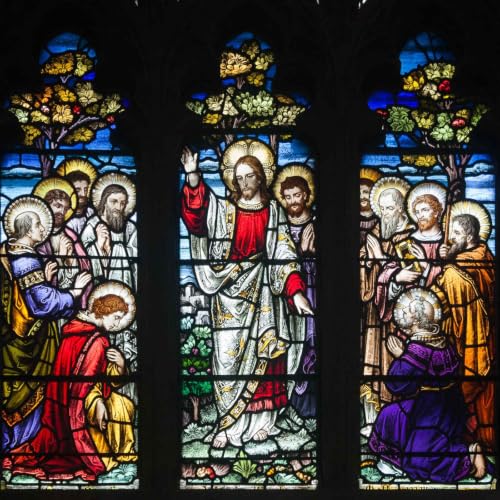
    Image: Finoskov, CC BY-SA 4.0, via Wikimedia Commons

    Source of content: catholic-daily-reflections.com
    Copyright © 2025 My Catholic Life! Inc. All rights reserved. Used with permission via RSS feed.
    Show More Show Less
    6 mins
  • December 17, Advent Weekday - Fidelity to God’s Eternal Plan
    Dec 16 2025
    Read Online

    The book of the genealogy of Jesus Christ, the son of David, the son of Abraham… Thus the total number of generations from Abraham to David is fourteen generations; from David to the Babylonian exile, fourteen generations; from the Babylonian exile to the Messiah, fourteen generations.” Matthew 1:1; 17

    This lengthy list of Abraham’s and David’s descendents, leading to Jesus, is much more than a listing of names. It’s an illustration of God’s fidelity to His promises. To Abraham, God promised “All the families of the earth will find blessing in you” (Genesis 12:3). To David, God promised “Your house and your kingdom are firm forever before me; your throne shall be firmly established forever” (2 Samuel 7:16).

    Certain divine qualities are revealed in these passages. Unwavering fidelity, continuity through the ages, and God’s eternal plan to bless all people through the descendants of Abraham and David are among them. These qualities are not only important for Scripture study, enabling scholars to better understand the whole of salvation history, they also are important to each one of our lives today.

    When God makes a promise, He is faithful to that promise. What promises has God made to you? He has promised the gifts of grace, happiness, holiness, and eternal life to all who become members of His Kingdom. This promise of unwavering fidelity should inspire hope within our hearts, especially when life is difficult. Difficulties can tempt us to despair, anxiety, and fear. Confidence in God’s fidelity will keep us firmly grounded in the certainty of hope that God will never let us down when we remain faithful to Him.

    In our fast-paced and ever changing world, continuity and consistency are often absent. Many people change their views based on the latest trends. The barrage of constant news, political and moral opinions, and changing economic and social conditions tempt us to change with the latest ideas. God’s ideas, however, never change. These promises should lead us to establish our lives not on the latest opinions or popular culture, but on the rock-solid principles of faith, as revealed by God.

    We are among those who receive blessings promised to “all the families of the earth” through Abraham. Jesus is that final descendent through Whom every good blessing comes. His mission opens the floodgates of grace to all who turn to Him in their need. Don’t ever doubt that perfect and eternal plan of salvation.

    Reflect today on God’s perfect fidelity, continuity, and promise of eternal salvation to all who become members of His Kingdom. That Kingdom will remain forever while every other kingdom will pass away. Resolve to remain a full citizen of that Kingdom by being unwaveringly faithful to God’s promises, and you will be blessed now and forever to share in the eternal plan of our saving God.

    My faithful God, Your eternal Word never changes. Your perfect plan invites me to share in the salvation promised to all who follow You and become members of Your Kingdom. Grant me the gift of perfect fidelity to You so that I am consistently united to You and always remain a member of Your eternal Kingdom on Earth and in Heaven. Jesus, I trust in You.

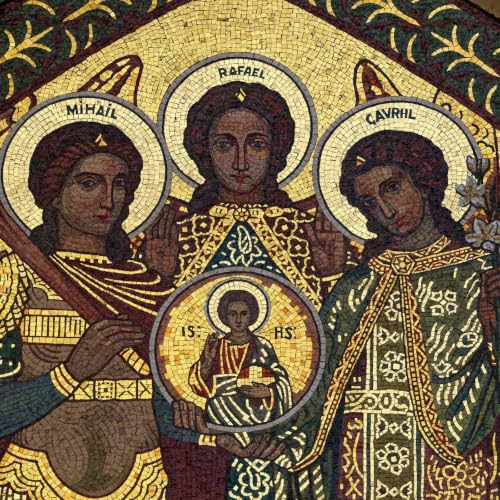
    Image: © José Luiz Bernardes Ribeiro

    Source of content: catholic-daily-reflections.com
    Copyright © 2025 My Catholic Life! Inc. All rights reserved. Used with permission via RSS feed.
    Show More Show Less
    5 mins
  • Tuesday of the Third Week of Advent - Humbly Repent and Obey
    Dec 15 2025
    Read Online

    “What is your opinion? A man had two sons. He came to the first and said, ‘Son, go out and work in the vineyard today.’ The son said in reply, ‘I will not,’ but afterwards he changed his mind and went. The man came to the other son and gave the same order. He said in reply, ‘Yes, sir,’ but did not go. Which of the two did his father’s will?” Matthew 21:28–31

    Jesus addressed this question to the chief priests and elders of the people. As the passage continues, Jesus humbles them by saying, “Amen, I say to you, tax collectors and prostitutes are entering the Kingdom of God before you.” He explains that the chief priests and elders of the people were like the second son. They gave lip service to God’s commands but failed to humbly repent and obey.

    The fact that “tax collectors and prostitutes” were entering the Kingdom of God should give us great hope. No one is beyond God’s mercy if they humbly listen to Him, repent, and begin to obey. Though neither son’s response is ideal, hopefully we are more like the first son.

    When we hear God’s Word and understand His continuously deepening call to holiness, we will find it challenging. Often, our first reaction to a deeper revelation of the Gospel is “No!” Our sinful habits are hard to break, and our fallen human nature is difficult to align with God’s will. Don’t be surprised if you find God’s will initially challenging.

    As God’s voice and His will become clearer, our first response must always be repentance. This should not surprise us. We must learn to build a habit of repentance if we want to grow closer to God and live His will. Initially, we often react to repentance in a negative way, but we shouldn’t. Though we might be like the first son and say “no” when God calls us to obedience, if we build a habit of repentance, then we will eventually find great joy in that act. Over time, we will find that our response becomes “Yes, I will go,” and then we go, having discovered the value in obedience.

    Reflect today on whether you often pay lip service to God, pretending to do His will, or if you regularly experience God’s call to repentance on a deepening level. Identify yourself with the repentant tax collectors and prostitutes, and imitate their humility when they were confronted with their sins. Know that repentance is the beginning of freedom and is the first step toward greater unity with God. My demanding Lord, every command You issue is a command of love.

    Though obedience to You is often initially challenging, help me to see the great value in it. Give me the courage and fidelity I need to hear Your voice, repent of my sin, and obey You in all things. Jesus, I trust in You.

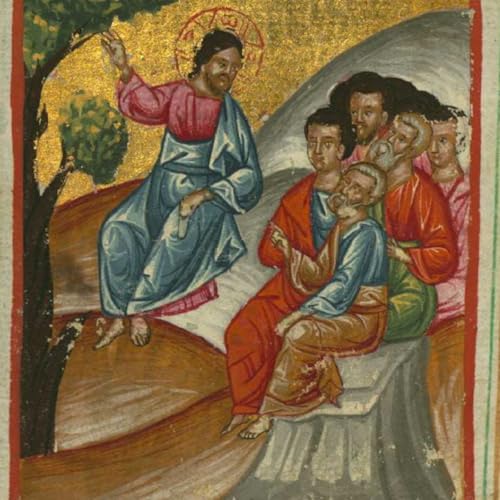
    Image: Andrei Mironov, CC BY-SA 4.0, via Wikimedia Commons

    Source of content: catholic-daily-reflections.com
    Copyright © 2025 My Catholic Life! Inc. All rights reserved. Used with permission via RSS feed.
    Show More Show Less
    4 mins
  • Monday of the Third Week of Advent - Confronting Irrationality
    Dec 14 2025
    Read Online

    When Jesus had come into the temple area, the chief priests and the elders of the people approached him as he was teaching and said, “By what authority are you doing these things? And who gave you this authority?” Matthew 21:25–27

    The chief priests and the elders of the people were supposed to shepherd the people into eternal salvation. They were supposed to be instruments of God’s divine will, prophetic voices, and priests who offered holy sacrifices for the atonement of sin. In practice, they were none of those things.

    As this Gospel passage progresses, we see more clearly why Jesus rebuked them so firmly. “Jesus said to them in reply, ‘I shall ask you one question, and if you answer it for me, then I shall tell you by what authority I do these things. Where was John’s baptism from? Was it of heavenly or of human origin?’” (Matthew 21:24–25). The religious leaders refused to answer the question because neither answer suited their agenda. If they said John’s baptism was of heavenly origin, they feared that Jesus would ask them why they didn’t believe John. If they said of earthly origin, they feared the crowd who believed John to be a prophet. So they took the easy way out and said, “We do not know.” As a result, Jesus did not answer their question.

    Jesus’ response to these religious leaders gives us insight into how to respond to those in our lives who directly challenge our faith. At times, we might encounter criticism that is irrational. We might be tempted to get angry and engage that irrational criticism. This often leads to an unproductive conversation.

    Our Lord’s approach to irrationality in this passage was quite different. Though Jesus judged these religious leaders as God, His human interaction with them was not judgmental or defensive. Instead, He asked a question that forced them to face their irrationality, bringing it into the light. When they refused to admit their irrationality, Jesus remained silent.

    One thing this tells us is that it is rarely beneficial to engage a person on the level of their irrationality. Silently forgiving their judgment does not mean we need to engage them in it. If someone confronts us with humility and sincerity, this opens the door to a healthy conversation. If their questioning of our actions is irrational, it’s often best ignored. This approach is loving because it imitates our Lord and diffuses the irrational criticism, opening the door to a more healthy conversation later.

    Reflect today on whether Jesus’ experience with the irrational religious leaders of His time is something you experience with those in your life. Though some people are blessed to be surrounded by very supportive and faith-filled family and friends, others are not. Ponder the ways God wants you to live your faith openly, even if it draws criticism. When it does, try to imitate the humility and wisdom Jesus manifested so that you are not drawn into unhealthy and irrational conversations.

    Lord of true Wisdom, You always knew how to interact with people with perfect charity and truth. To those who needed Your compassion, You were compassionate. To those who were irrational, You humbly revealed their irrationality. Please give me the gift of wisdom so that I will always relate to those in my life in accord with Your holy will. Jesus, I trust in You.

    Image via Adobe Stock

    Source of content: catholic-daily-reflections.com
    Copyright © 2025 My Catholic Life! Inc. All rights reserved. Used with permission via RSS feed.
    Show More Show Less
    5 mins
  • Third Sunday of Advent (Year A) - Rejoicing in the Cross
    Dec 13 2025
    Read Online

    “Go and tell John what you hear and see: the blind regain their sight, the lame walk, lepers are cleansed, the deaf hear, the dead are raised, and the poor have the good news proclaimed to them. And blessed is the one who takes no offense at me.” Matthew 11:4–6

    Suppose a priest came to your church to put on a parish mission, and during that mission he miraculously healed the blind, crippled, terminally ill, and deaf. What if he even raised the dead to life? How would you respond? Most likely with amazement! You’d contact everyone close to you and tell them about those miracles, encouraging them to attend the next session.

    Though Jesus’ ministry was filled with miracles, they were far from the most important part of His mission. His miracles healed bodies that would eventually die, but His preaching healed souls that would live forever because His preaching ultimately pointed to His greatest work—to suffer and die for the salvation of souls.

    If you were alive as Jesus walked the earth, performed miracles, preached the Good News, suffered death, and rose again, which of His actions would have had the greatest effect on you? When we consider our Lord’s mission, we must consider it all as one unified whole, not missing the most important aspects. From a faith perspective, Jesus’ suffering, death, and Resurrection are clearly His greatest acts. By freely embracing suffering and death, He transformed the worst into the best: the consequence of sin—which is death—into the instrument of eternal life. When Jesus said, “And blessed is the one who takes no offense at me,” He was identifying those as blessed who discovered the great value of His Cross.

    If we were to ask Jesus’ first followers whether they would prefer to see Jesus perform miracles or suffer and die, most likely they would prefer the miracles. Such a question might have even left them confused. Why would anyone want to see a great prophet suffer and die? Yet, today, from a theological perspective, it is clear that Jesus’ suffering, death, and Resurrection are the greatest acts in human history.

    Imagine being our Blessed Mother who witnessed it all, stood by her Son as He endured His Cross, and rejoiced with Him when He rose. Unquestionably, if we asked our Blessed Mother whether she preferred to see a few miracles from her Son or to witness His perfect sacrifice that brought salvation to the world, her holy and sorrowful heart would choose the latter.

    Reflect today on these questions within the context of your own life. When you pray, do you primarily ask for favors, blessings, or miracles? Or do you primarily pray for the Cross? Do you see greater value in having God remove some suffering from your life or in transforming your suffering by the power of His Cross? Ask for the grace to die with our Lord, to become a living sacrifice of love, and to have the strength to lay down your life for others. By choosing that which has eternal value, you choose the better part and will rejoice in that better part forever.

    My sacrificial Lord, You invite me to take no offense at Your suffering and death; to see beyond the pain, blood, and physical death; and to discover the unfathomable riches of Your Sacrifice. Please give me the eyes of faith to see the value of not only accepting Your Cross, but also to see the value of living Your Passion in my own life by laying down my life with You. Jesus, I trust in You.

    Image via Adobe Stock

    Source of content: catholic-daily-reflections.com
    Copyright © 2025 My Catholic Life! Inc. All rights reserved. Used with permission via RSS feed.
    Show More Show Less
    6 mins
  • Saturday of the Second Week of Advent - Seeking to Understand
    Dec 12 2025
    Read Online

    As they were coming down from the mountain, the disciples asked Jesus, “Why do the scribes say that Elijah must come first?” Matthew 17:9a & 10

    The final book of the Old Testament, written by the prophet Malachi around the fifth century BC, contains a prophecy that Elijah would return to prepare the way for the coming of the Messiah (see Malachi 3:23–24). The scribes used this prophecy to argue that Jesus could not be the Messiah since Elijah had not yet returned, at least not in the way they expected. This argument caused confusion in the minds of Jesus’ Apostles.

    Just before the event in today’s Gospel passage, Jesus took Peter, James, and John up a high mountain where He was transfigured before them, giving them a glimpse of His heavenly glory. This experience strengthened their conviction that Jesus was indeed the Messiah. However, as they descended the mountain, they asked Jesus about Malachi’s prophecy, seeking to understand how Jesus could be the Messiah if Elijah had not yet come. Jesus clarified this for them: “‘I tell you that Elijah has already come, and they did not recognize him…’ Then the disciples understood that he was speaking to them of John the Baptist” (Matthew 17:12–13).

    As we grow in our faith and become convinced of Jesus’ identity as the Messiah, we might also encounter what appear to be contradictions. For example, faith and science sometimes seem to conflict, even though they are ultimately harmonious. The existence of human suffering and injustice can challenge our understanding of an all-powerful, all-loving God. Moral questions can arise when we encounter differing opinions, and various other experiences might seem difficult to reconcile with the Word of God.

    If you find yourself facing such challenges, take inspiration from Peter, James, and John. Allow your faith to deepen through moments of prayer and personal encounters with God. Then, do not shy away from questions that arise in your mind. If something seems contradictory to your faith, seek understanding. Turn to our Lord in prayer, study the teachings of the Church, read the writings of the saints, and trust that God’s Wisdom is perfect. It will clarify every apparent contradiction and dispel all confusion.

    Reflect today on the example of these three Apostles seeking clarity from Jesus. They asked their question with faith, not with skepticism. They did not doubt but sought understanding. Imitate them with every question that arises in your mind so that you may find interior peace and become a beacon of wisdom to others.

    Lord of true Wisdom, You are Truth Itself. As I grow in my faith and as my faith is challenged in daily life, help me never to doubt but to seek You all the more. Grant me the gifts of wisdom, understanding, and knowledge so that I may become ever more fervent in following You. Jesus, I trust in You.

    Image via Adobe Stock

    Source of content: catholic-daily-reflections.com
    Copyright © 2025 My Catholic Life! Inc. All rights reserved. Used with permission via RSS feed.
    Show More Show Less
    5 mins
  • December 12, Our Lady of Guadalupe - Our Lady, the Greatest Evangelist
    Dec 11 2025
    Read OnlineThen the angel said to her, “Do not be afraid, Mary, for you have found favor with God. Behold, you will conceive in your womb and bear a son, and you shall name him Jesus.” Luke 1:30–31Of all the saints throughout the ages, none has proved to be as powerful an evangelist as the Mother of God. While on Earth, she lived a mostly hidden life, demonstrating the perfection of virtue to those closest to her. As a young mother, she cared daily for the needs of her divine Son, constantly pondering the mystery of His Incarnation as it unfolded before her eyes. Her love for her Son, lived out during Jesus’ earthly life, overflowed from her Immaculate Heart and continues to do so today.After being assumed body and soul into Heaven, her work did not cease. As Queen of Heaven and Earth, she continues to intercede for her spiritual children, mediating the grace we need to grow in holiness. Throughout history, many Marian apparitions have been reported. While numerous reports have not been formally approved, some have, including the apparition of Our Lady of Guadalupe in 1531 to Saint Juan Diego.Following the Spanish conquest of the Aztec Empire in 1521 by Hernán Cortés, the capital was rebuilt into what became Mexico City. Despite the cruelty some Spanish settlers inflicted on the Indigenous people, the Catholic Church, through missionaries and leaders, including Bishop Juan de Zumárraga, sought to protect their rights and dignity while evangelizing them. Many of the Indigenous were understandably suspicious of the missionaries, yet some converted, including a man named Cuauhtlatoatzin, who took the Christian name Juan Diego after his baptism, and his wife, who took the name María Lucía.On December 9, 1531, while walking to Mass and catechism class, Juan Diego passed Tepeyac Hill, where the Blessed Virgin Mary appeared to him. She spoke to him in his native language, revealed herself as the Mother of God, and asked for a chapel to be built in her honor on that very spot. When Juan took the message to Bishop Zumárraga, the bishop asked for a sign.On December 12, Juan’s uncle fell seriously ill. While hurrying to find a priest for the Last Rites, Juan took a different route to avoid delaying his journey, but the Mother of God appeared again. She assured him that his uncle was already healed and provided the promised sign for the bishop. She instructed Juan to pick roses blooming unseasonably on the hill; when he brought them to the bishop in his tilma, an image of the Virgin, just as Juan had seen her, appeared on his cloak. Juan Diego’s tilma now hangs in the Basilica of Our Lady of Guadalupe, in Mexico City, fulfilling the Blessed Mother’s request.While the miraculous image was awe-inspiring, what followed was even more astounding. Over the next decade, millions of Indigenous people embraced the Christian faith, marking one of the most remarkable mass conversions in Church history—all due to the Blessed Mother’s evangelization and intervention. Her love for the Indigenous people and her desire for their salvation brought her to them personally, confirming the truth of the Gospel preached by the Church.As we honor Our Lady of Guadalupe, reflect today on the tender love of the Mother of God. She deeply desired the salvation of the Indigenous people, just as she desires the salvation of all. Pray for her intercession so that millions more around the world may hear and accept God’s saving message. Most loving Virgin of Guadalupe, as you looked down from Heaven upon the struggles and suffering of the conquered people of the Aztec Empire, your Immaculate Heart overflowed with compassion for them. As a result, you went to them personally to share the saving message of Your Son. Please pray for me, for the Americas, and for all your children, that we all will be guided to Your Son and come to know His gift of salvation. Our Lady of Guadalupe, pray for us. Jesus, I trust in You.Main Image- Image via WikimediaFeatured Image - First Miracle of Our Lady of Guadalupe by Lawrence OP, license CC BY-NC-ND 2.0.Source of content: catholic-daily-reflections.comCopyright © 2025 My Catholic Life! Inc. All rights reserved. Used with permission via RSS feed.
    Show More Show Less
    6 mins
  • Thursday of the Second Week of Advent - Entering the Kingdom of Heaven
    Dec 10 2025
    Read Online

    “Amen, I say to you, among those born of women there has been none greater than John the Baptist; yet the least in the Kingdom of heaven is greater than he. From the days of John the Baptist until now, the Kingdom of heaven suffers violence, and the violent are taking it by force.” Matthew 11:11–12

    The two sentences in the passage above can be challenging to comprehend, but the insights of Church Fathers and saints offer us a deeper understanding.

    In the first sentence, Jesus declares John the Baptist to be the greatest of those born of women, highlighting John as the last and greatest of the Old Testament prophets. However, John did not live to see the fullness of Christ’s work—His death, resurrection, and the outpouring of the Holy Spirit at Pentecost. This is why Jesus adds, “yet the least in the Kingdom of heaven is greater than he.” In other words, even the smallest person who receives sanctifying grace through Christ’s redemptive work is greater in spiritual privilege than the greatest person before the era of grace.

    The second sentence may be even more puzzling. How can the Kingdom of Heaven suffer violence, and who are the violent ones taking it by force? The Greek words translated as “violence” and “violent” can also be understood as “forcefully advancing” and those who “advance with force and determination.” Jesus is teaching that entering the Kingdom of God requires great determination, a forceful rejection of sin, and a vigorous pursuit of holiness.

    Together, these sentences reveal Jesus’ message about the incredible blessing of living in the time of grace. We are more privileged than even John the Baptist because we live in the fullness of the Christian dispensation. However, this privilege comes with a responsibility: we must engage in a “violent” battle against our fallen nature, the temptations of the world, and the deceptions of the devil. Entering the Kingdom of God requires zeal, determination, and an all-consuming passion for the things of God.

    It’s easy to fall into a mediocre practice of our Christian faith, letting our disordered desires and emotions dictate our actions. But Jesus calls us to something greater. Those who understand the Christian life as a spiritual battle against sin will be prepared to move beyond mediocrity into a fervent, committed embrace of God’s grace, becoming fuller participants in the Kingdom of Heaven.

    Reflect today on how actively you are receiving and cooperating with God’s grace. Are you willing to step out of your comfort zone, repent of every sin, and passionately choose to follow Christ? Though this path requires great sacrifice, the reward of the Kingdom of Heaven is worth it a hundredfold.

    My most glorious Lord, the gift of Your grace is all I need to achieve the greatness to which You call me. Please pour forth that grace in abundance, and help me to respond to Your invitation to repent of my sin so that I may become a more active member of Your glorious Kingdom of Heaven on Earth and ultimately in Heaven. Jesus, I trust in You.

    Image via Adobe Stock

    Source of content: catholic-daily-reflections.com
    Copyright © 2025 My Catholic Life! Inc. All rights reserved. Used with permission via RSS feed.
    Show More Show Less
    5 mins